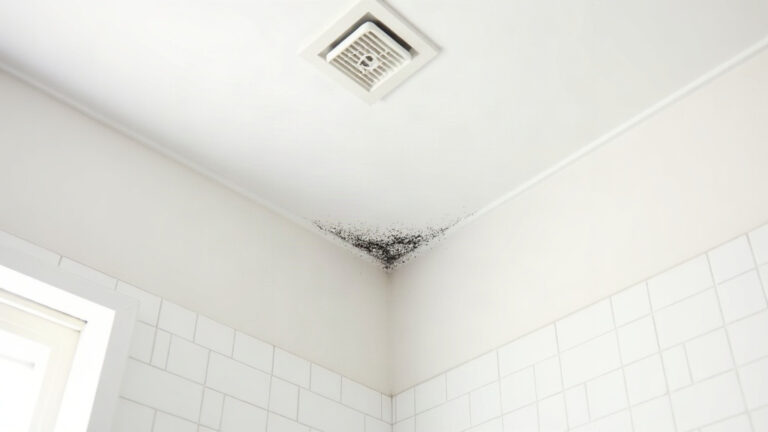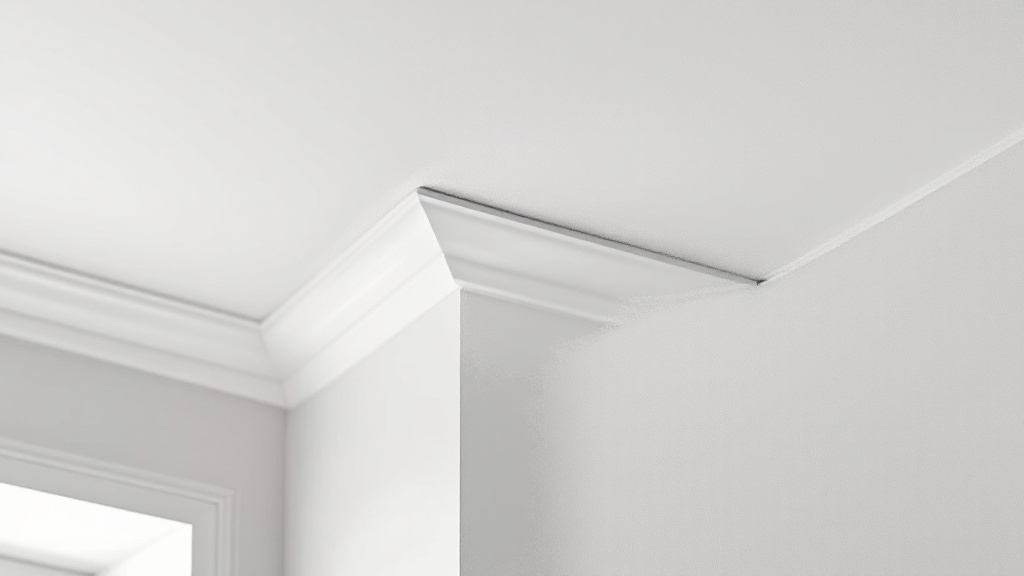
Most cracks in a ceiling are cosmetic. A fine line along a plasterboard joint or where the ceiling meets the cornice usually comes from the house moving a little with heat and moisture. It can be set, sanded and painted. The cracks that need a closer look are wide ones, cracks that keep growing, cracks with a stain or a sag next to them, and cracks that show up suddenly after a storm or building work nearby.
The tricky part is telling the two apart from the floor.
Here’s what each type of crack usually means and when it’s worth calling someone.

Hairline cracks in ceiling joints and cornices
A hairline crack is thin enough that you couldn’t slide a coin into it. In a plasterboard ceiling these usually follow a straight line. That line is almost always a joint between two sheets, or the edge where the ceiling meets the cornice.
They happen because timber and plasterboard move at different rates. The roof frame swells and shrinks with the seasons, and on the Gold Coast the swing between humid summers and drier winters is enough to open a weak joint. Air conditioning switching on and off can add to it.
On its own, a hairline crack is a finish problem rather than a structural one. If it bothers you, it can be raked out, re-set with fresh compound and tape where needed, then sanded and painted. A dab of filler and a coat of paint tends to crack again in the same spot, because the joint underneath hasn’t been fixed.
Cracks in ceiling cornices
Cornice cracks are among the most common. The cornice is glued along two surfaces, the wall and the ceiling, and those two surfaces move separately. A gap opening along the top or bottom edge of the cornice usually means the adhesive has let go in that section. Re-fixing and re-setting it is a small repair. If a long run has pulled away and is drooping, that’s worth looking at sooner.
Cracks in ceiling plasterboard that need a closer look
Some cracks are telling you something about what’s above the ceiling. These are the ones to take seriously:
- Wide cracks: A crack you can fit a coin into, or one that has an edge sitting higher on one side than the other.
- Growing cracks: One that is noticeably longer or wider than it was a few weeks ago.
- Cracks with a sag: Where the ceiling dips or bows near the crack, the sheets may be coming away from the battens.
- Cracks with a stain: A brown or yellow mark next to the crack points to water getting in from the roof, a pipe or an air conditioning unit.
- Diagonal cracks from a corner: Cracks running out from the corner of a door or window can be linked to movement in the frame or the footings.
- Lots of cracks in one area: A spiderweb pattern across one part of the ceiling.
None of these mean the ceiling is about to come down. They do mean the cause should be found before anyone patches it, because a patch over an active problem won’t last.
When cracks in a ceiling come with sagging
A crack along a joint with a visible dip beside it is the one to act on. It can mean the glue or fixings holding the sheet to the battens have failed. If the sag is getting worse, keep people out of the room until it has been checked.
What causes cracks in ceilings on the Gold Coast
The cause decides the fix, so it’s worth thinking about what has changed in the house.
- Seasonal movement: Heat, humidity and dry spells make the roof timbers move. This is the usual cause of hairline joint and cornice cracks.
- Water: A leaking roof, a blocked gutter or a dripping air conditioning drain soaks the plasterboard. Wet board softens, cracks and stains.
- Weak joints: Joints that were set without enough tape or compound when the ceiling went up tend to crack first, often in the first few years.
- Building work: Renovations, roof work or heavy foot traffic in the roof space can crack a ceiling below.
- Settling of the house: Newer homes go through some early settling. Older homes can move when the soil under them gets very wet or very dry.
If you’re not sure what’s behind it, a plasterer can check the joints, the fixings and the battens from below and tell you whether the problem is in the ceiling itself or somewhere else.
Should you watch cracks in your ceiling or fix them now?
If the crack is fine, straight and not changing, there’s no rush. It’s often easiest to have it repaired when the room is next painted.
A simple way to keep an eye on one is to mark each end with a light pencil line and write the date next to it. Take a photo with a ruler or a coin beside the crack. Check again in a few weeks. If it has grown past your pencil marks, or the gap is wider, it’s time to have it looked at.
Fix it sooner if:
- The crack has a stain, a sag or loose paint around it.
- It appeared suddenly after a storm, a leak or work in the roof.
- Bits of plaster or dust are falling from it.
- It keeps coming back in the same place after being patched.
Cracks in an older ceiling
If your home was built before 1990, be careful with older ceiling sheets. The Queensland Government says houses built before 1990 are likely to contain asbestos and that you can’t tell just by looking at a material (Queensland Government, How to handle asbestos safely after a storm). Painting over sound sheeting doesn’t disturb it. Sanding, drilling or cutting does, so the sheeting should be identified first.
How cracks in a ceiling are repaired
The repair depends on what caused the crack and how much of the ceiling is affected.
Re-setting cracks in ceiling joints
For hairline cracks along joints and cornices, the old compound is raked out along the crack. Where the joint has opened, new tape goes in. Then fresh plaster compound is applied in thin coats, sanded flat and sealed. The ceiling is painted so the repair doesn’t show as a different colour or sheen.
Re-fixing or replacing plasterboard behind cracks in a ceiling
If the sheet has come away from the battens, it can often be screwed back up and the joints re-set. If the board is soft, stained right through or broken, that section is cut out and replaced with new plasterboard. Where a crack was caused by water, the leak has to be fixed first, or the new board will end up the same way.
If a large part of the ceiling is affected, replacing the whole ceiling can make more sense than patching it in many places. That decision comes down to the condition of the board and the framing above it. Our residential plastering page covers the ceiling repairs and replacements we do in Gold Coast homes.
What changes the cost of fixing cracks in a ceiling
A small crack along one joint is a very different repair from a cracked, sagging ceiling across a whole room. These are the things that change the price:
- How many cracks: One crack or several across the house.
- The cause: Simple seasonal movement or a leak that needs fixing first.
- Re-set or replace: Re-setting joints against cutting out and replacing board.
- Ceiling height and access: High ceilings, stairwells and tight rooms take longer.
- Painting: Touching up one area or repainting the whole ceiling so it matches.
- Older materials: Whether the sheeting needs to be identified before work starts.
The easiest way to find out what yours needs is a free quote. Contact us with a photo of the crack, how long it’s been there and whether it has changed. We’ll explain what we think is causing it and the repair we recommend.
Gold Coast Plastering. Call (07) 5315 8349. QBCC Licence 15576119 (MGH Contracting) and QBCC Licence 15511709 (All Paintworx).