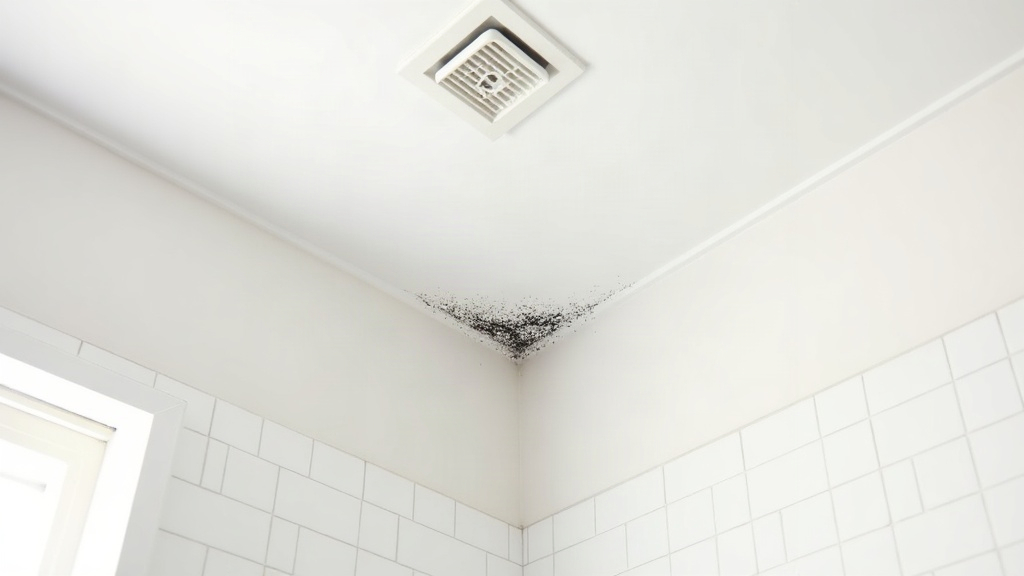
Black spots above the shower. You wipe them off, and a few weeks later they’re back. Bathroom ceiling mould is common in Gold Coast homes, and the fix comes down to one thing: is the mould sitting on the paint, or has it got into the plasterboard?
If it’s on the surface, a proper clean, a sealer and a bathroom ceiling paint will usually fix it. If the board is soft, stained right through, bubbling or sagging, paint only hides the problem for a while. That section of ceiling needs to come out and be replaced.
Here’s how to tell which one you’ve got.
Why bathroom ceiling mould keeps coming back on the Gold Coast
Mould needs moisture, and a Gold Coast bathroom gets plenty of it. A hot shower fills the room with steam. When that warm, wet air hits the cooler ceiling, it turns back into water. Add our humid summers and a bathroom that never quite dries out, and the ceiling stays damp for hours every day.
The ceiling cops it worst because steam rises. The corners and the patch right above the shower usually go first. (In a lot of bathrooms those are also the spots furthest from the window.)
The exhaust fan behind bathroom ceiling mould
A missing, weak or blocked exhaust fan is a common cause. Some older fans just push the damp air into the roof space, so it never leaves the house. Homes built to NCC 2022 need bathroom exhaust to discharge to outdoor air, directly or through a duct, rather than into the roof space (ABCB, NCC 2022 Housing Provisions Part 10.8). Plenty of Gold Coast homes were built before this requirement, so it’s worth finding out where your fan goes.
Other habits that feed bathroom ceiling mould
- Short fan run time: The fan switches off with the light while the room is still full of steam.
- Closed door and window: The steam has nowhere to go but up.
- Leaks from above: A roof leak or a leaking pipe in the ceiling space wets the board from behind. That needs fixing first.
- Flat ceiling paint: Ordinary flat ceiling white holds moisture and gives mould an easy surface to grow on.
How to tell if bathroom ceiling mould is only on the surface
If it wipes off and the board underneath is firm and dry, it’s usually surface mould. Four quick checks will tell you a lot.
- Wipe test: Clean a small patch with a damp cloth and household detergent. If the paint underneath comes up clean, the mould was sitting on top.
- Press test: Push gently on the ceiling with a flat hand. It should feel solid. Soft, spongy or crumbly board means moisture has got into the plaster.
- Stain test: Brown or yellow rings around the mould point to water coming through from above, not just shower steam.
- Shape test: Bubbling paint, peeling joint tape, cracks along the joins or a dip in the middle all mean the board itself is affected.
Pass all four and you’re probably looking at a repaint. Fail any of them and keep reading.
Cleaning bathroom ceiling mould safely
Don’t dry brush it. Queensland Health warns that dry brushing can release spores into the air and spread mould to other parts of the house. Their advice is to wear rubber gloves, safety goggles and a P2 mask, and to use a mould product, detergent or white vinegar, never mixing vinegar with bleach (Queensland Health, Cleaning up mould after a disaster). They also note bleach may not kill mould on porous surfaces.
As a precaution, if anyone in the house has asthma or a lung condition, get someone else to do the cleaning.
When repainting fixes bathroom ceiling mould
Repainting works when the mould is only on the paint and the board is sound. The order of the steps matters more than the brand of paint.
- Clean and dry: The ceiling is cleaned, rinsed and left to dry right through. Painting over damp board traps the moisture in.
- Seal: A mould resistant sealer or primer goes on first, so the topcoat bonds and old marks don’t bleed back through.
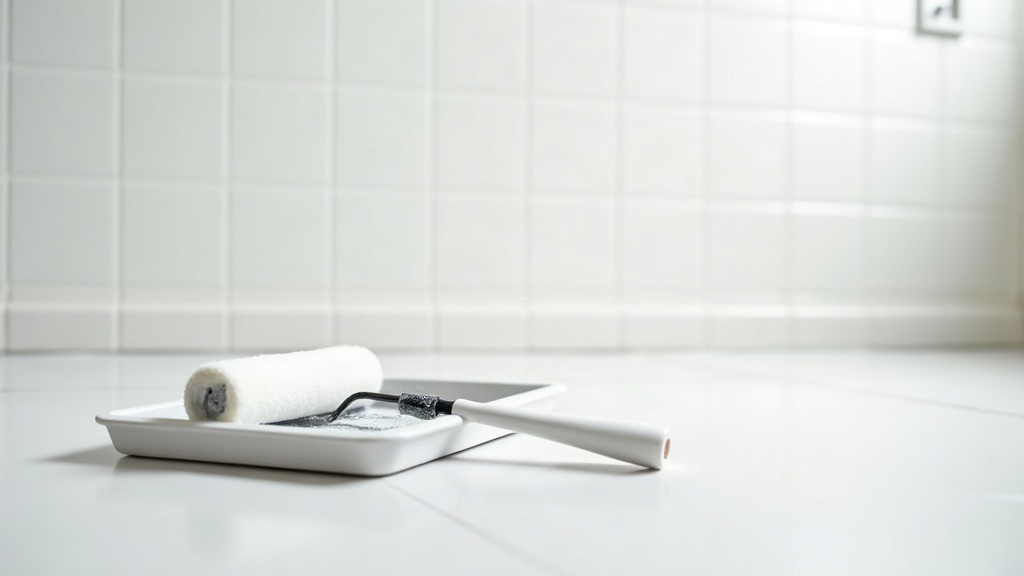
- Bathroom ceiling paint: Two coats of a paint made for wet areas, usually with a mould inhibitor and a low sheen that copes with condensation better than flat white.
- Fix the airflow: If nothing changes with the fan or ventilation, the mould comes back. Paint slows it down. It can’t win against a room that never dries.
Because we plaster and paint as one team, small holes or cracked joints get filled and sanded before the paint goes on. You can see how we approach interior painting on the Gold Coast, including painting repaired ceilings.
When bathroom ceiling mould means replacing the plasterboard
Once the mould is in the board, painting won’t fix it. Standard plasterboard has a paper face over a gypsum core. When it stays wet long enough, the paper feeds the mould and the core goes soft.
These are the signs that section of ceiling has to come out:
- Soft board: It feels damp or spongy, or crumbles when you press it.
- Fast return: The mould is back within weeks of a proper clean and repaint.
- Spreading stains: Brown water marks keep getting bigger.
- Sagging: The ceiling dips between the joists or battens.
- Lingering smell: A musty smell hangs around after cleaning.
What replacing a mouldy bathroom ceiling involves
The damaged section is cut out back to sound board, or the whole ceiling comes down if most of it is affected. The framing above is checked to make sure it’s dry and solid. New board goes up, normally a moisture resistant plasterboard made for wet areas. Then it’s set, sanded and painted with a bathroom ceiling paint.
The leak or the ventilation problem has to be sorted before the new ceiling goes up. Otherwise the new board ends up the same way as the old one.
What affects the cost of fixing bathroom ceiling mould
The price depends on what’s going on behind the paint, so it’s worked out once the ceiling has been looked at. These are the things that move it:
- Repaint or replace: A clean, seal and repaint is a smaller piece of work than cutting out and replacing board.
- How much is affected: One corner patch is very different from the whole ceiling.
- Height and access: High ceilings, raked ceilings and tight bathrooms take more setting up.
- Cornice: Whether the existing cornice can stay or has to be replaced along with the board.
- Finish: The level of plaster finish and how many coats the ceiling needs.
A free quote gets you a firm answer for your bathroom. Get in touch and tell us where the mould is and how long it’s been there. A photo helps.
Stopping bathroom ceiling mould from coming back
- Run the fan longer: Leave it going for a while after the shower ends, not just while the water’s running.
- Open up: Crack the window or leave the door open after a shower.
- Wipe the corners: A quick wipe every few weeks stops new spots taking hold.
- Check the fan: Hold a sheet of toilet paper near the grille while it runs. If it doesn’t pull the paper in, the fan isn’t moving much air.
Small patches of bathroom ceiling mould are a cleaning and painting problem. Soft or stained board is a plastering problem. Either way, the sooner it’s looked at, the smaller the repair usually is.
Gold Coast Plastering. Call (07) 5315 8349. QBCC Licence 15576119 (MGH Contracting) and QBCC Licence 15511709 (All Paintworx).
