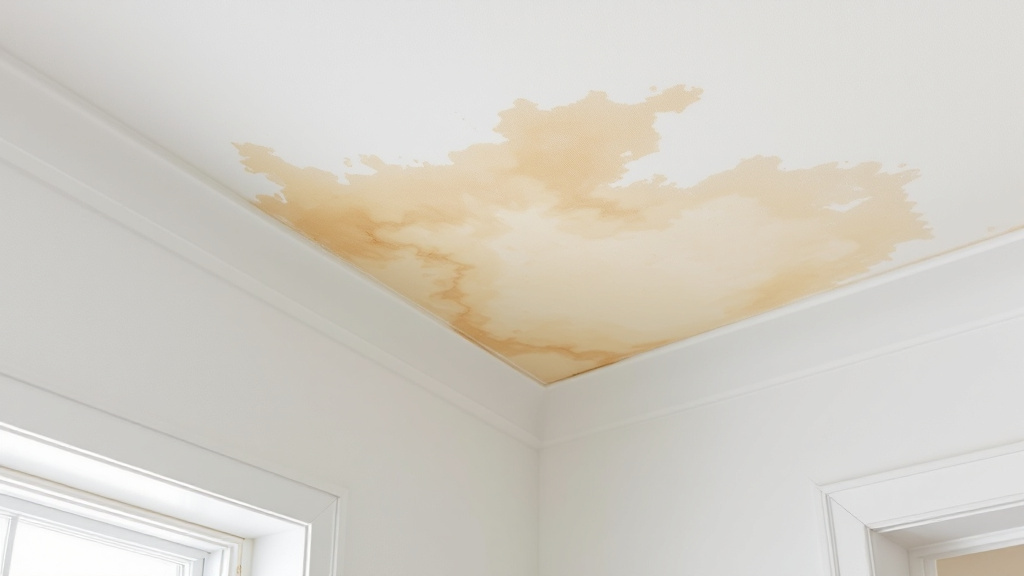
A water damaged ceiling needs three things straight away: keep people and power away from it, stop the water getting in, and take photos before anything is cleaned up or removed. After that, the ceiling has to dry out properly before anyone can tell whether it needs a patch, a repaint or new plasterboard.
On the Gold Coast, a water damaged ceiling usually follows a summer storm, a blocked gutter or a leak from the bathroom upstairs. The stain is usually the first sign. Sometimes the ceiling is already soft or starting to drop by the time anyone looks up.
Here’s what to do, in the order it matters.
Signs of a water damaged ceiling to look for
Water doesn’t always drip through. Often it spreads across the top of the plasterboard and shows up somewhere other than where it came in. These are the signs worth checking:
- Brown or yellow rings: A stain with a darker edge usually means water has soaked in and dried more than once.
- Bubbling or peeling paint: The paint has lifted because the plaster underneath got wet.
- A soft or spongy patch: Press gently with a broom handle. If it gives, the board has lost strength.
- Sagging between the joists: The sheet is dropping away from the framing. Keep clear of it.
- Cracks along the joins: Wet sheets move, and the set joints are the first place it shows.
- A musty smell: Damp plaster and insulation can hold moisture long after the rain stops.
One stain on its own isn’t always serious. A sag, a soft patch or water near a light fitting needs attention first, starting with safety.
Make the water damaged ceiling safe before anything else
If the ceiling is sagging or bulging with water, keep everyone out of the room. Move furniture if you can do it without standing under the wet area. A wet sheet of plasterboard is heavy, and it can come down without much warning.
Water damaged ceilings near lights and power
Water and wiring are the bigger risk. Queensland’s Electrical Safety Office says to stay away from switchboards damaged by water and not to touch them, and to use a licensed electrician rather than doing your own electrical work (Electrical Safety Office, Electrical safety during storms). If water is coming through near a downlight, fan or switch, leave it alone and get an electrician to check it before the power goes back on in that area.
Asbestos in an older water damaged ceiling
If your Gold Coast home was built before 1990, treat any fallen ceiling material with care. The Queensland Government says homes built before 1990 are likely to contain asbestos and that you should assume a material contains it, since you can’t tell by looking (Queensland Government, How to handle asbestos safely after a storm). Don’t break, sand or sweep old sheeting until you know what it is.
Stop the leak causing the water damaged ceiling
Fixing the ceiling before the leak is fixed just means doing it twice. The source needs sorting first, and that’s usually a roofer or a plumber, not a plasterer.
Common sources above Gold Coast ceilings:
- Storm damage: Lifted tiles, cracked flashing or a sheet of roofing that has moved in high wind.
- Gutters and valleys: Leaves block them, the water backs up, and it runs inside instead of down the downpipe.
- Upstairs bathrooms: A failed shower seal or a leaking pipe can wet the ceiling of the room below for weeks before it shows.
- Air conditioning: A blocked drain line can drip into the ceiling space.
If you’re not sure where it’s coming from, tell the roofer or plumber where the stain is and when it appears. A stain that grows only after rain points to the roof. One that grows after showers points to the bathroom.
Take photos before the water damaged ceiling is touched
If you plan to make an insurance claim, photos matter. The Queensland Government suggests taking photos and video of the damage and talking to your insurer before you authorise major repairs (Queensland Government, Insurance). A phone is fine. Get a wide shot of the room, close shots of the stain and any sag, and a photo of where the water came in if you can see it safely.
We can’t tell you what your policy covers. That’s between you and your insurer. Ask for the repair quote in writing, so you have the damage and the repair described when you talk to them.
Let a water damaged ceiling dry before deciding on a repair
A wet ceiling can look worse than it is, or better. Plasterboard that gets wet once and dries out can sometimes be saved. Board that stayed wet for days, or got soaked more than once, usually can’t.
Give it time and airflow. Open windows when the weather allows, run fans, and keep the room ventilated. Depending on the weather and how much water got in, this can take days rather than hours (Gold Coast humidity in summer doesn’t help). If the insulation above is soaked, it may need to come out so the ceiling can dry from both sides.
Repair or replace a water damaged ceiling?
Once it’s dry and the leak is fixed, the ceiling usually falls into one of three groups.
Water stain only on the ceiling
If the board is firm and flat and only the paint is marked, the repair is a stain blocking sealer and a repaint. Painting straight over a water stain with ordinary ceiling paint usually lets the mark bleed back through, so the sealer step matters. It’s often best to repaint the whole ceiling so the patch doesn’t stand out.
Patch repair for part of the ceiling
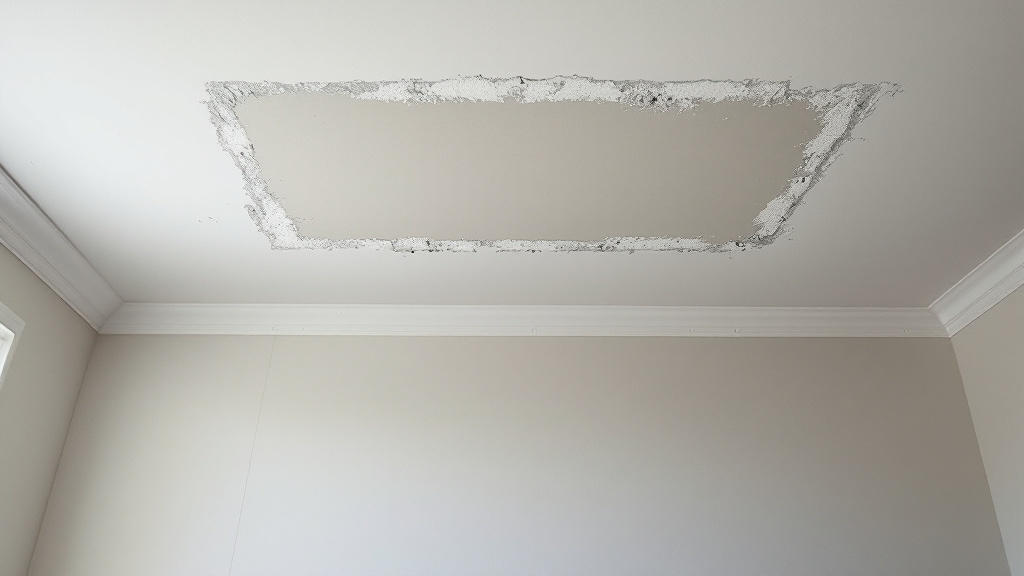
If a section is soft, cracked or has dropped a little but the rest is sound, we cut out the damaged part back to the framing, fix in new plasterboard, set the joins and finish it ready for paint. Done well, the patch shouldn’t show once the ceiling is painted.
Full ceiling replacement
If the sag runs across several joists, the board has crumbled, there’s mould through the sheet, or the room has had water through it more than once, replacing the ceiling is usually the better option. A patch on a tired ceiling tends to crack around its edges later. Our residential plastering page covers ceiling replacements and water damage repairs for Gold Coast homes.
What affects the cost of repairing a water damaged ceiling
Two ceilings with the same stain can need very different repairs, so the price comes down to what’s behind the stain. These are the things that change the quote:
- Size of the damage: A small patch against a whole room of new board.
- Height and access: High ceilings, stairwells and raked ceilings take longer to set up.
- Cornice: Whether the cornice was damaged and needs replacing or matching.
- Framing: Wet battens or joists sometimes need replacing before new board goes on.
- Painting: Whether the whole ceiling is sealed and repainted so the repair doesn’t show.
- Asbestos: Older ceilings may need testing before any work starts.
The quickest way to find out what yours needs is a free quote. Get in touch with photos, the suburb, and a quick note on what happened and when. We’ll explain the repair we recommend and why.
Gold Coast Plastering. Call (07) 5315 8349. QBCC Licence 15576119 (MGH Contracting) and QBCC Licence 15511709 (All Paintworx).